What are they?
Roped Bulls
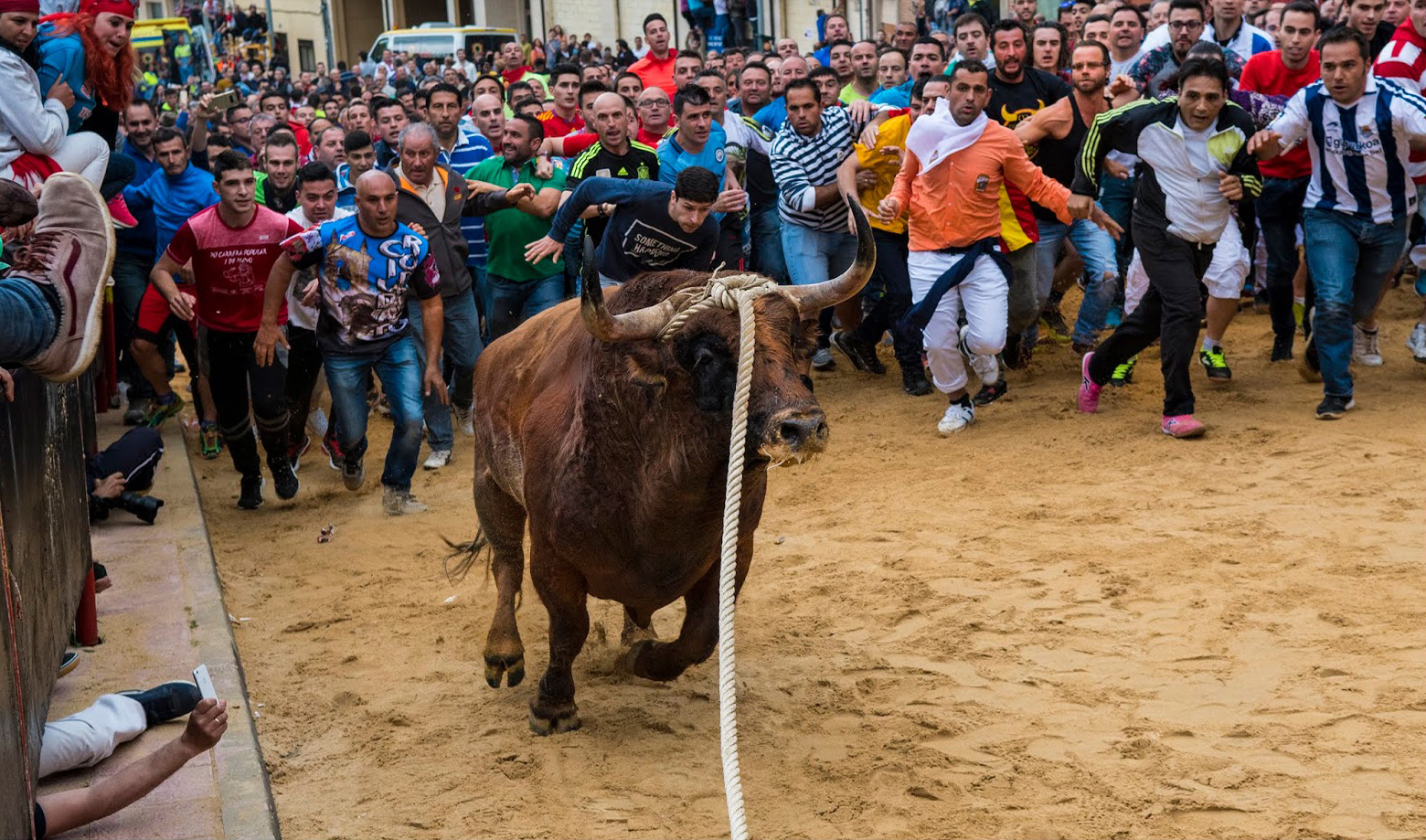
A "toro ensogado" (also known as "enmaromado" or roped bull) is a popular bullfighting event in which a bull is released in a town with one or more ropes tied around its head so that its movements and charges can be controlled.
The roped bull is probably the most archaic of these spectacles, and also the most distressing for the animal, since it is the one that most restricts its movement, and for the longest time.
The suffering is heightened in this type of event by the great physical exhaustion the animals build up, as they are pushed to the limits of their aerobic capacity. In every event you can see how, shortly after it begins, the bulls resort to abdominal breathing with their mouths open, tongues out, and heavy salivation.
The problem
The suffering of the roped bull begins as soon as it is loaded onto the truck, where it may remain for hours until the event begins. During transport, hunger and thirst intensify its suffering, to the point that bulls have sometimes died inside the trucks, or have been unable to withstand the journey, becoming exhausted and refusing to move.
Before it is released into the streets, electric shocks and sticks are used to provoke the bull into appearing fiercer, but with every charge it will be pulled to a stop, and every time it pauses it will be yanked forward again. During the run, which can last between 30 and 60 minutes, it is forced to run over asphalt, charging into stone walls, metal fences, cars or road signs.
Reasons
The roped bull allows for greater control over the animal, which is why this type of event attracts a wider, more varied audience of all ages, including minors, who often run after the bull on their parents' shoulders or holding hands. For the bullfighting industry, it is the best way to build a following and secure the next generation of fans for the tradition. Many more women also take part, since they feel their safety is better guaranteed, despite the fact that people are killed by bulls' horns every year.
Consequences
The harm caused by roping a bull can put these animals' lives at risk, as well as causing physical and psychological injuries.
- Risk of death: deaths generally occur as a result of the brutal blows the bull itself can suffer against stone walls, trees, metal fences or other street furniture, as it desperately tries to free itself from the ropes.
- Fractures and injuries: cervical dislocations can occur while struggling to break free from the ropes, or from heavy falls while running on a type of surface the animal is not accustomed to, nor physically built for. Bulls that suffer injuries that prevent them from being hired out for further events are sent to the slaughterhouse.
- Exhaustion: Bovines in general are calm, ruminant animals that spend half their lives grazing and the other half resting. They are not built to run for long periods, least of all the adult animals chosen for this type of event, which are much heavier and clumsier. It is common for them to be panting with their tongues out within minutes, dehydrated, with their hearts on the brink of collapse.
- Psychological suffering: Although bulls may seem tough, strong and fierce, the truth is that they are highly excitable, temperamental and nervous ruminants, who show signs of panic when separated from their social group. If we add to that the anguish of feeling trapped inside a truck or crate, tied by the head and deprived of free movement, the noise of shouting, the applause… we can say that roping a bull undoubtedly causes it a great deal of psychological suffering.