What are they?
Fire Bulls (Toros Embolados)
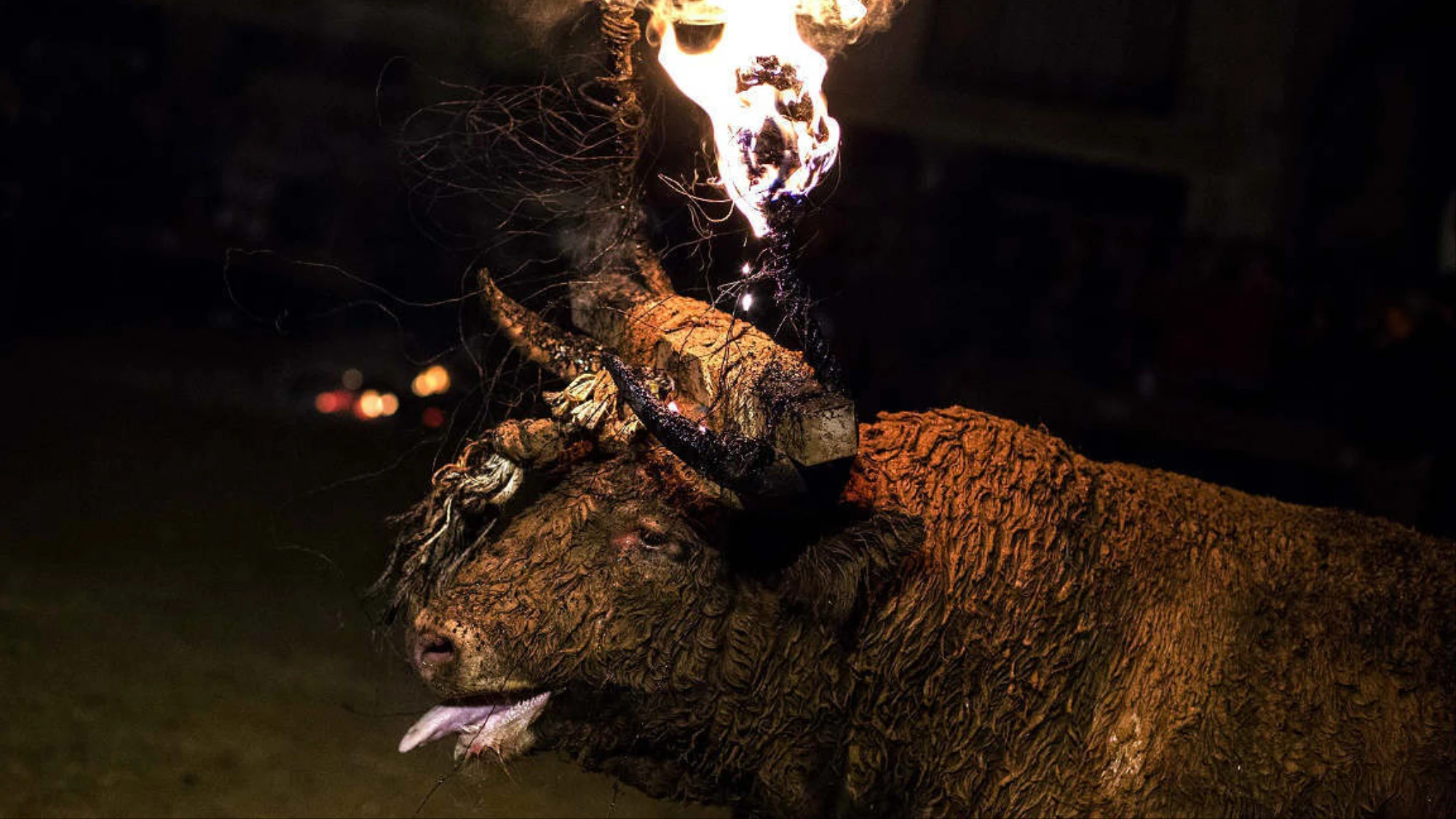
"Embolar" with fire consists of immobilising the bull by the head, tied with ropes to a wooden post. To get the bull to the post once it comes out of the truck or the pens, it is dragged by the other end of the rope using the strength of the team of handlers, known as "emboladores". At this point the bull often falls and violently jerks its head, since the team will bring it to an abrupt stop using the rope tied to its head. It is also common for the bull to become entangled in the rope, becoming immobilised by the legs or badly positioned in front of the post, which often makes the process even longer and more distressing.
Once immobilised, metal fittings are attached to its horns, with balls soaked in a flammable liquid or substance fixed to the ends, capable of keeping the fire burning for a prolonged period. These balls are then set alight and the rope holding the bull is cut, so that it can run in the enclosed area set aside for this purpose, usually in bullrings, portable rings, or through the streets of the town.
The problem
Around 2,500 bulls have fire attached to their horns like this every year in a large number of Spanish towns, all with the blessing and subsidies of town councils, provincial councils and regional governments, despite the fact that this practice causes the bull intense suffering, as it becomes a victim of exhaustion, blows, falls, as well as disorientation, fear and anguish.
"Attaching balls soaked in a flammable substance to their horns and setting them alight, making the animal run and shake its head in desperation, is one of the cruellest forms of festivity we could have invented." — Aïda Gascón, Director of AnimaNaturalis
Reasons
The sole purpose of setting a bull's horns alight is to display an animal that generally causes amazement and admiration for its size, expressiveness and movements, with the fire added as a further element of spectacle and excitement that helps make the event a little more dramatic and entertaining. Sometimes, in addition to the fire, firework fountains are also attached to the horns, which for several seconds shoot sparks of fire several metres into the air. Fire bulls also serve as a display of the handlers' own skill and as a way for them to demonstrate their bravery.
Consequences
The harm caused by setting a bull's horns on fire can put these animals' lives at risk, as well as causing physical and psychological injuries. A large number of these animals are sent directly to the slaughterhouse that same night, since it is common for bullfighting clubs, rather than hiring the animal for the event and then returning it to the farm, to buy wild or untamed bulls — animals that have never been taken out of the field before.
- Risk of death: deaths from fire bull events generally occur as a result of brutal blows the bull inflicts on itself against stone walls, trees, metal fences or other street furniture, as it desperately tries to free itself from the burning balls attached to its head. They can also die of heart attacks caused by stress or exhaustion.
- Fractures and injuries: during the fire-bull process, cervical dislocations can occur while the animal struggles as it is being immobilised, or from heavy falls as it charges out of the truck or crate and the rope stops it violently. It can suffer all kinds of injuries and fractures throughout the rest of the event, since it is common for the bull to be provoked into climbing, descending and jumping obstacles, or crashing into the barriers that protect spectators. Bulls that suffer injuries preventing them from being hired out for further events are sent to the slaughterhouse.
- Burns: Burns to the head, eyes and back of the bull if a spark jumps from the fire attached to its horns.
- Psychological suffering: Although bulls may seem tough, strong and fierce, the truth is that they are highly excitable, temperamental and nervous ruminants, who show signs of panic when separated from their social group. If we add to that the anguish of feeling trapped inside a truck or crate, restrained by dozens of men holding down its whole body, the noise of shouting, fireworks, music or applause, and the natural fear of fire that any animal has, we can say that setting a bull's horns on fire undoubtedly causes it a great deal of psychological suffering.